
9 technical articles on the CemPU building system in arctic climate: BR2006 compliance, A2 fire class, logistics via Royal Arctic Line, installation in cold weather, U-value and operating economics in settlements, thermal bridges and structural design. Written for consulting engineers, architects, contractors and developers building in Greenland.
Short season. Complex logistics.
Limited workforce.
CemPU is designed for exactly that:
The knowledge hub is structured in five theme clusters covering specifically Greenlandic challenges: fire and regulatory approval, logistics and installation in a short season, energy and operating economics in settlements, structural design, and direct comparisons with competing systems.
Why A2-s1,d0 opens the doors to institutions and multi-storey housing in Greenland — and where the Greenlandic building regulation differs from the Danish one.

Why traditional steel panels with PIR/PUR are often refused in Greenlandic institutions and multi-storey housing — and how CemPU's A2-s1,d0 classification under EN 13501-1 solves the problem.
Read article →
Brief overview of the central differences between the Building Regulation for Greenland (BR2006) and the Danish building regulation — energy frame, snow load, wind load and moisture engineering.
Read article →From the factory in Ringe to the arctic construction site. Container packing, shipping schedule with Royal Arctic Line and installation in cold — how we plan delivery and installation within the short arctic building window.
How delivery is planned from factory in Ringe via Aalborg/Aarhus with Royal Arctic Line to Nuuk and coastal towns. Container packing, shipping schedule and installation window.
Read article →
How CemPU is installed on arctic construction sites. Dry installation without mortar, no drying time, robust against weather and temperature — what the site must prepare.
Read article →In settlements with expensive heating oil, every tenth of a W/m²K is worth more than in Denmark. Low U-value and thermal-bridge-free construction is not a comfort question — it is operating economics over the building's lifetime.
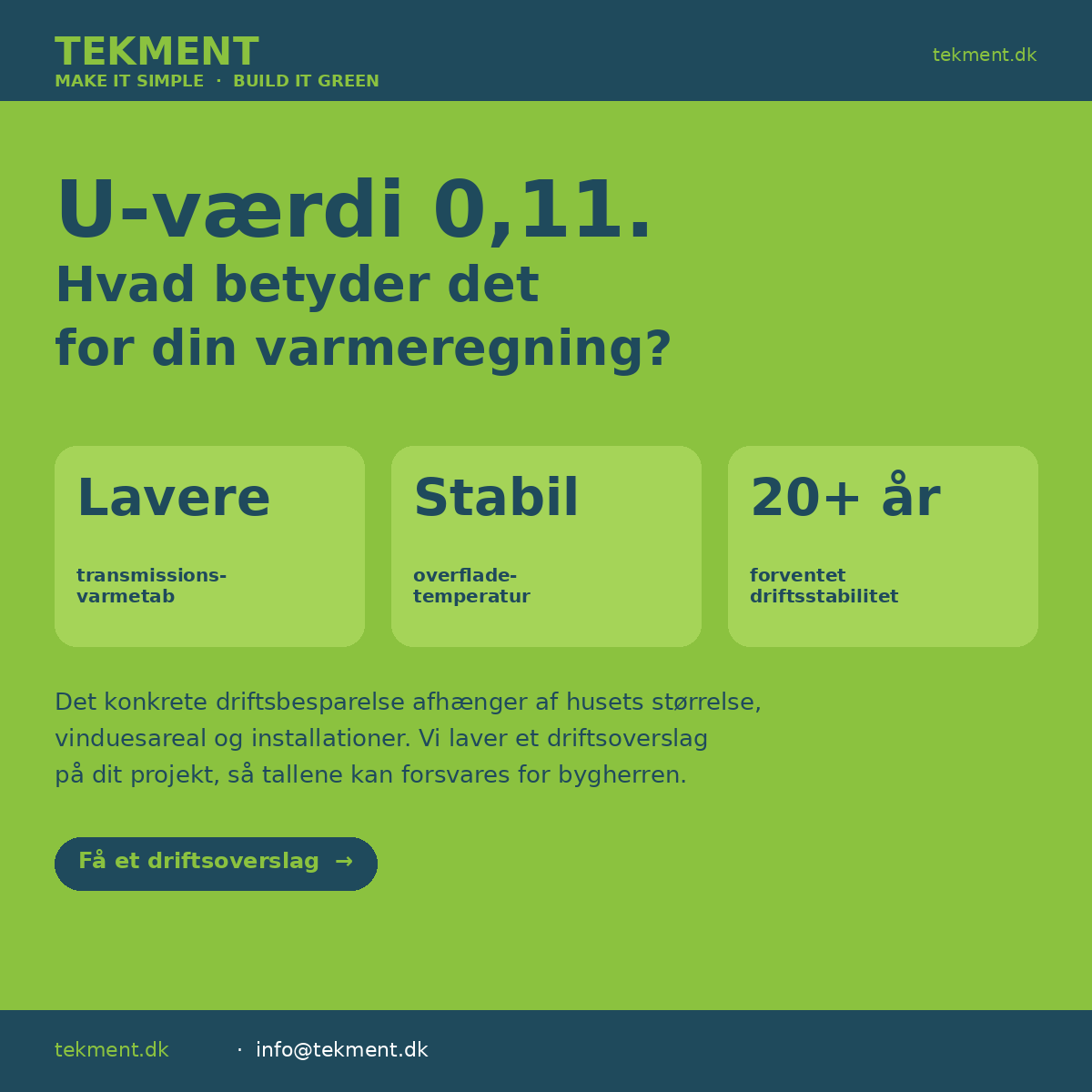
Why every tenth of a W/m²K matters more in Greenland than in Denmark. Concrete calculation for CemPU's 0.079 W/m²K translated to DKK/m² over lifetime.
Read article →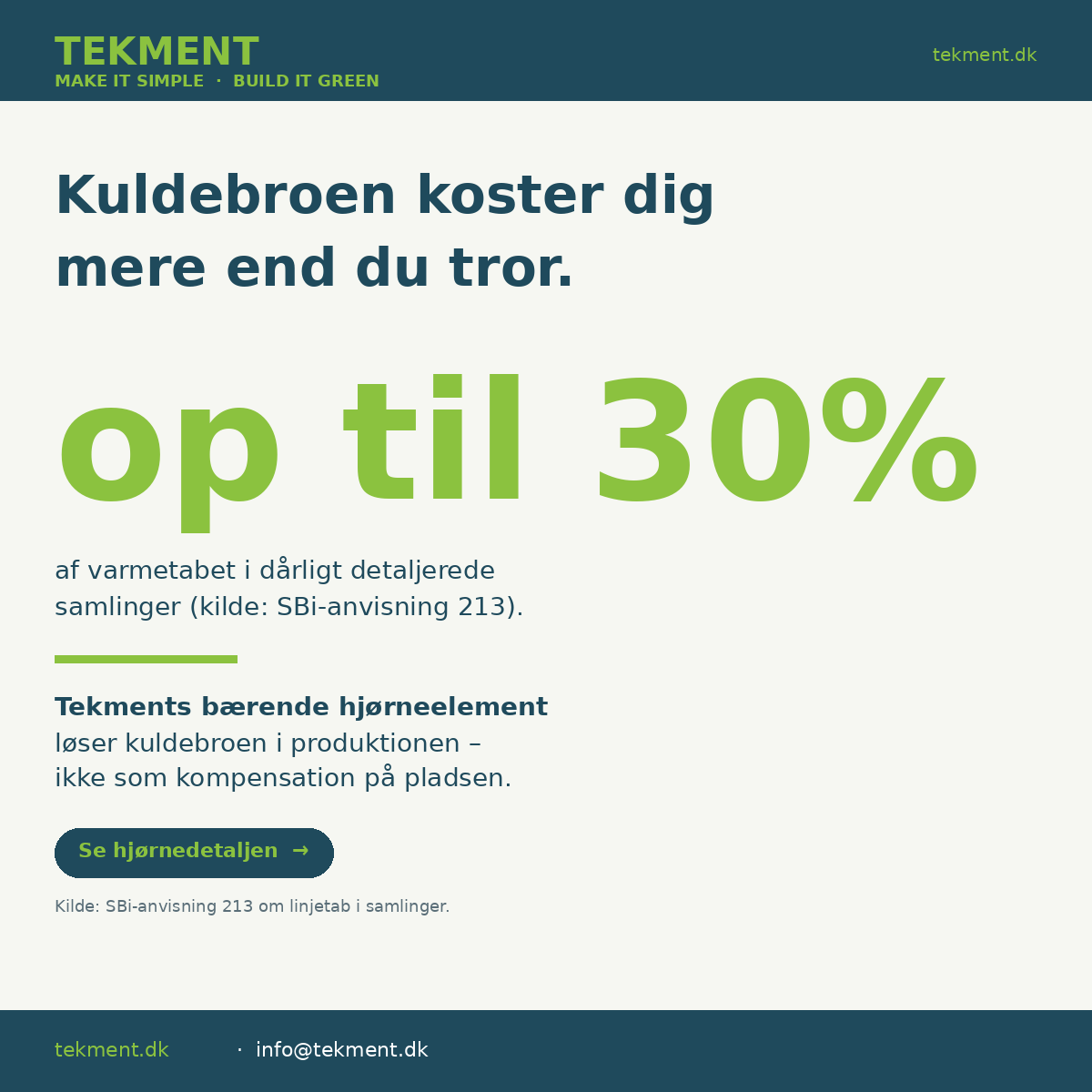
At -40 °C design temperature, even small thermal bridges can cause condensation, loss of comfort and mould. How CemPU's continuous PU core eliminates the problem.
Read article →Greenlandic projects are dimensioned per project according to zone-specific loads. Snow loads of 2.5–4.0 kN/m² and wind speeds up to 55+ m/s make structural documentation a core service — not an attachment.
Direct comparisons with the systems CemPU typically competes with in the Greenlandic market: steel panels with PIR/PUR foam and in-situ cast solutions in a short building season.
Permafrost changes how foundations are dimensioned. Point foundations, thermal bridges and thermal insulation. How to adapt CemPU.
Read article →Settlement energy typically costs DKK 3–5/kWh. Heating oil, diesel-generated electricity and district heating — how this affects the building choice.
Read article →Stricter requirements for fire (A2), acoustics (R'w 50 dB) and energy. CemPU's fire class opens settlement institutions directly.
Read article →Temperature difference of 50 K creates extreme vapour pressure difference. CemPU's PU core replaces traditional vapour barrier.
Read article →Build cost is 25–35% of total cost. Operation dominates. CemPU's TCO is typically 15–25% lower than traditional construction.
Read article →Wind speeds up to 55+ m/s create extreme noise load. CemPU's PU core dampens low frequencies markedly.
Read article →Existing settlement buildings from the 1960s–90s can be renovated with CemPU without demolition. Extension, energy renovation and internal remodel.
Read article →EN 1991 applies in Greenland too — but with higher load values. Snow load up to 4.5 kN/m², wind load up to 2.8 kN/m².
Read article →Direct comparison of the 5 most common building systems in Greenland: CemPU, traditional timber-frame, imported prefab houses, on-site cast concrete and PIR/PUR panels. U-value, fire class, m² cost, build time and BR2006 compliance.
Read article →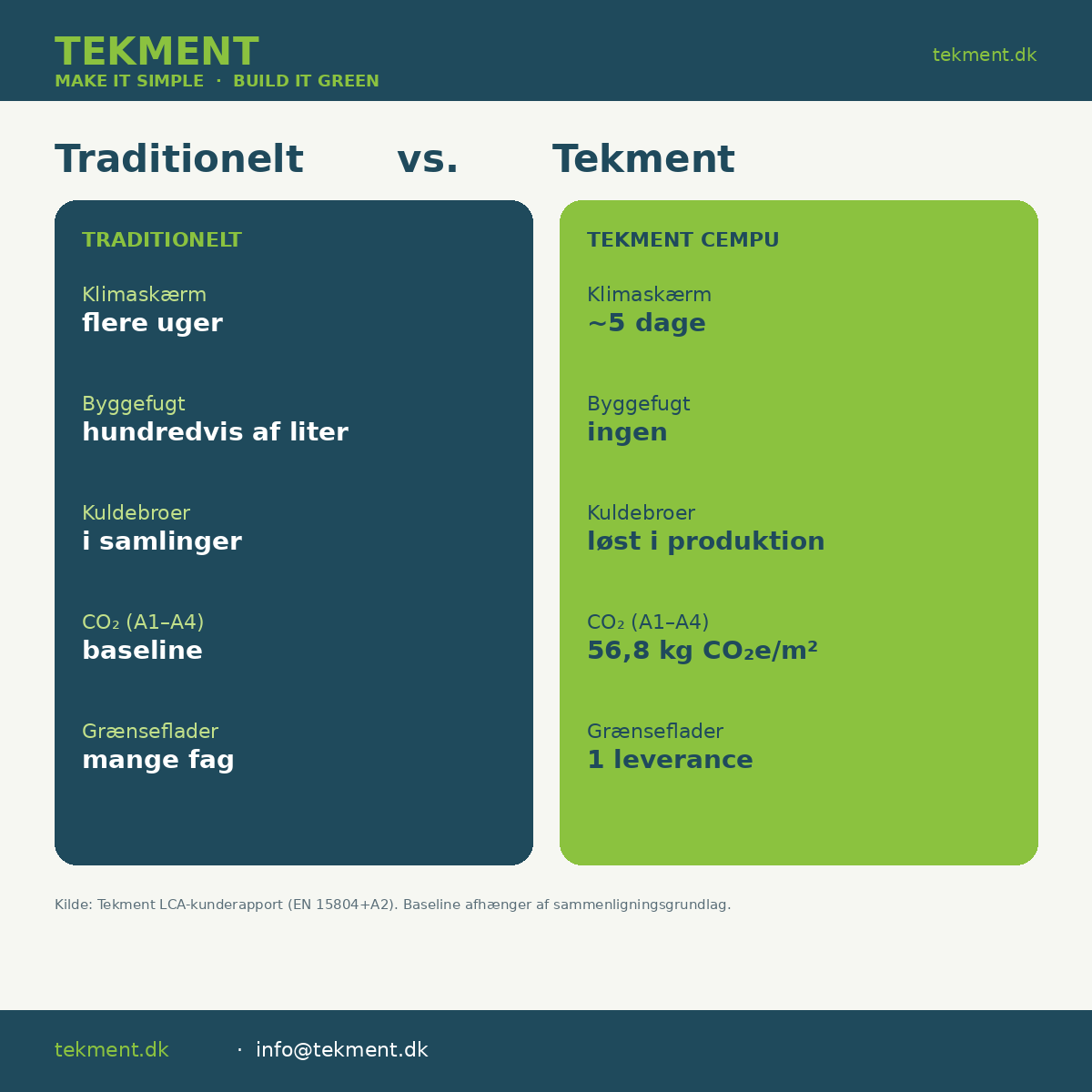
Direct comparison between CemPU and typical steel panels with PIR/PUR foam used in Greenland — fire, U-value, weight, installation time and regulatory approval.
Read article →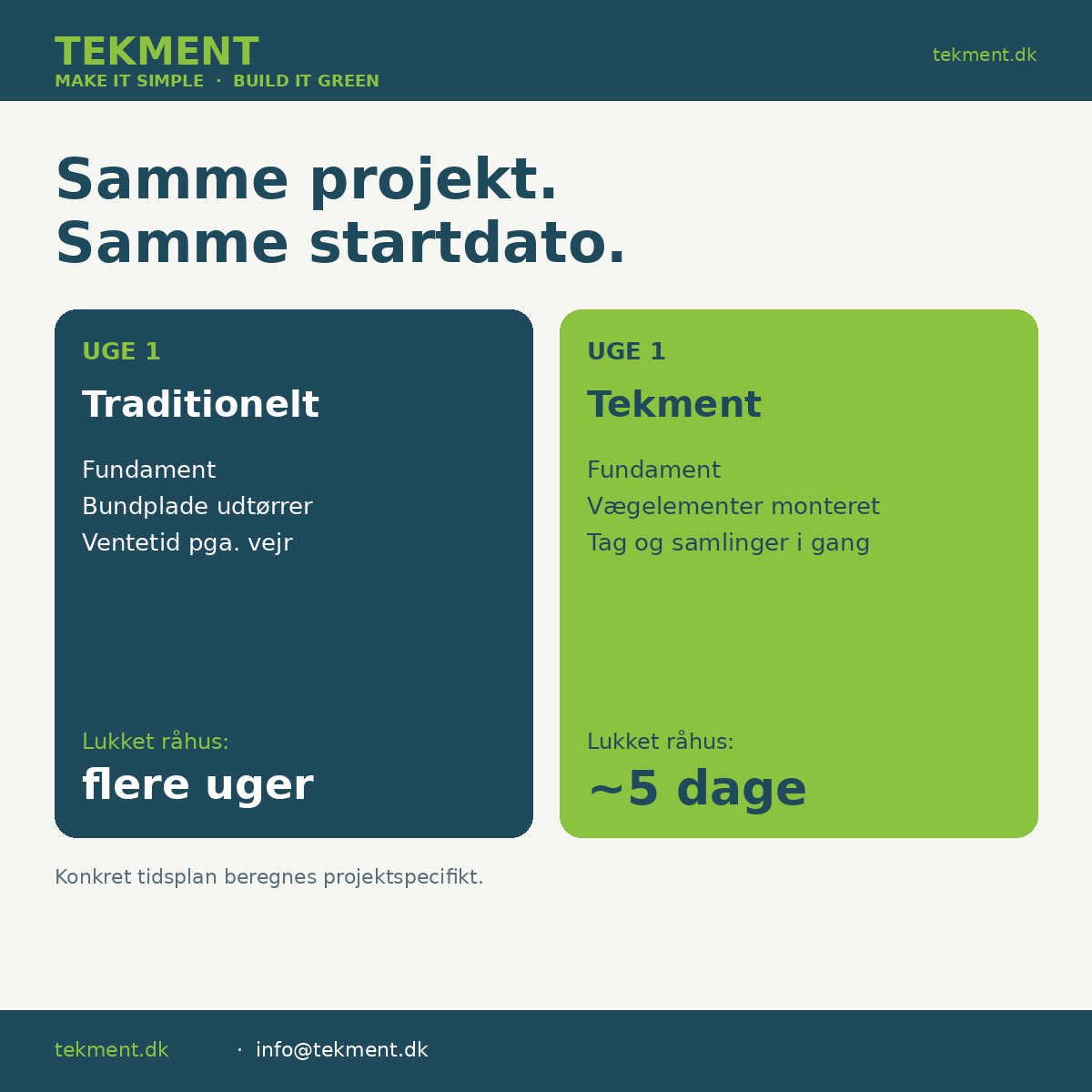
Why prefabrication is not an option but a necessity when the building season is 4–5 months. Schedule, logistics and staffing compared.
Read article →