
In a nutshell
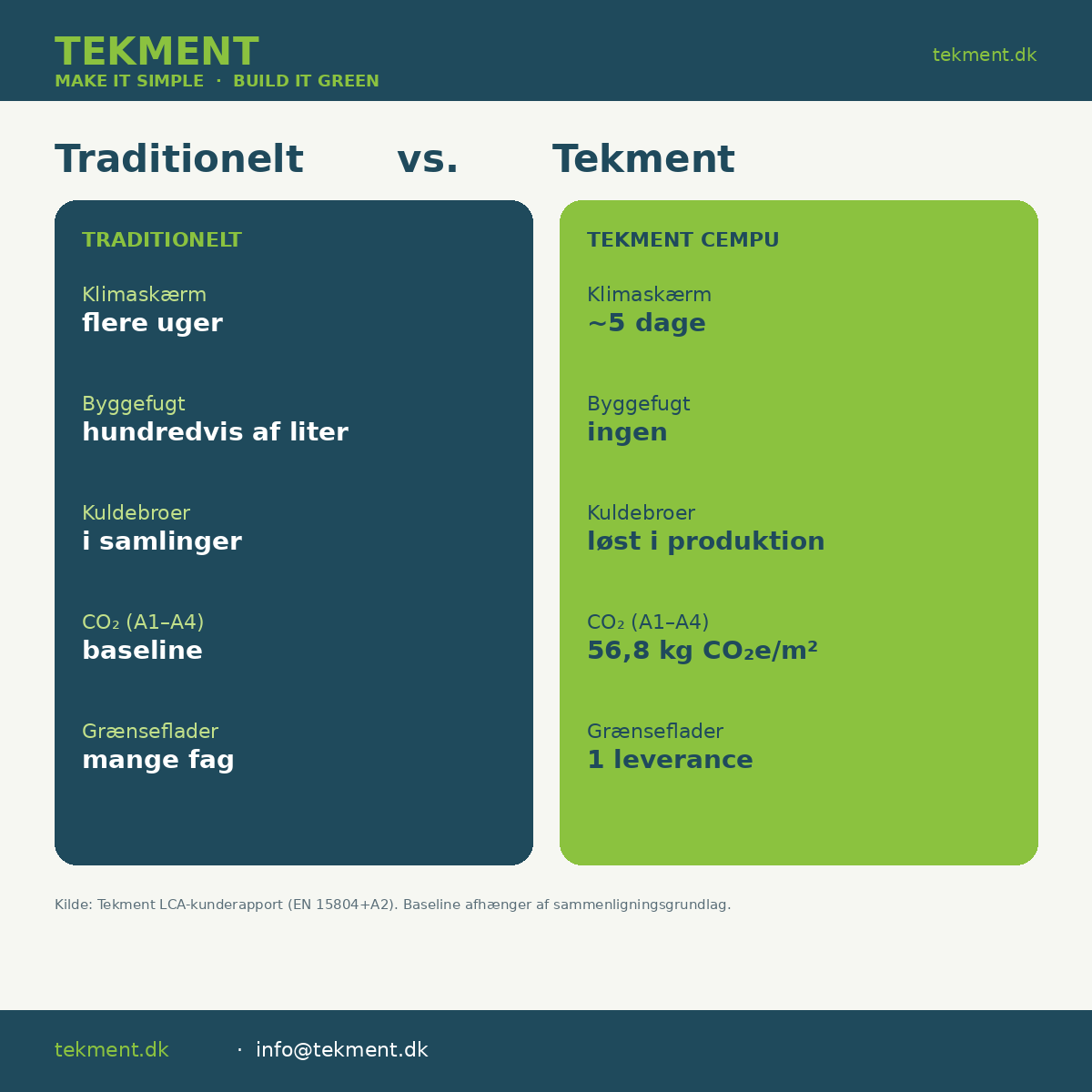
- Envelope: CemPU closes the shell in ~5 days vs. several weeks for traditional construction — independent of weather
- Construction moisture: 0 litres vs. hundreds of litres in traditional concrete/mortar construction — PU core does not absorb water
- Thermal bridges: Solved in production via the load-bearing corner panel — not dependent on craftsmanship on site
- CO₂: Documented 56.8 kg CO₂e/m² (A1–A4) per EN 15804+A2 with low-GWP PU
- Interfaces: One delivery integrates load-bearing, insulation, and envelope — vs. 5–7 separate trades in traditional construction
~5 days
vs several weeks
Envelope
time difference
0 L
vs hundreds
Construction moisture
litres
56.8
kg CO₂e/m²
A1–A4
documented
1
delivery
vs many trades
interfaces
What is the difference between CemPU and traditional construction?
Envelope
Traditional: several weeks depending on materials and weather. CemPU: ~5 days for a detached house, weather-independent.
Construction moisture
Traditional: hundreds of litres that have to be driven out mechanically. CemPU: 0 L – the PU core does not absorb water.
Thermal bridges
Traditional: solved in details on site, depending on craftsmanship and design. CemPU: solved in production via the load-bearing corner panel.
CO₂ (A1–A4)
Traditional: depends on material choice. CemPU: 56.8 kg CO₂e/m² (A1–A4) for Tekment 336 with low-GWP PU — documented per EN 15804+A2.
Interfaces
Traditional: many trades (mason, carpenter, insulator, plumber, electrician, plasterer, etc.). CemPU: one delivery integrates load-bearing, insulation and envelope.