
In a nutshell
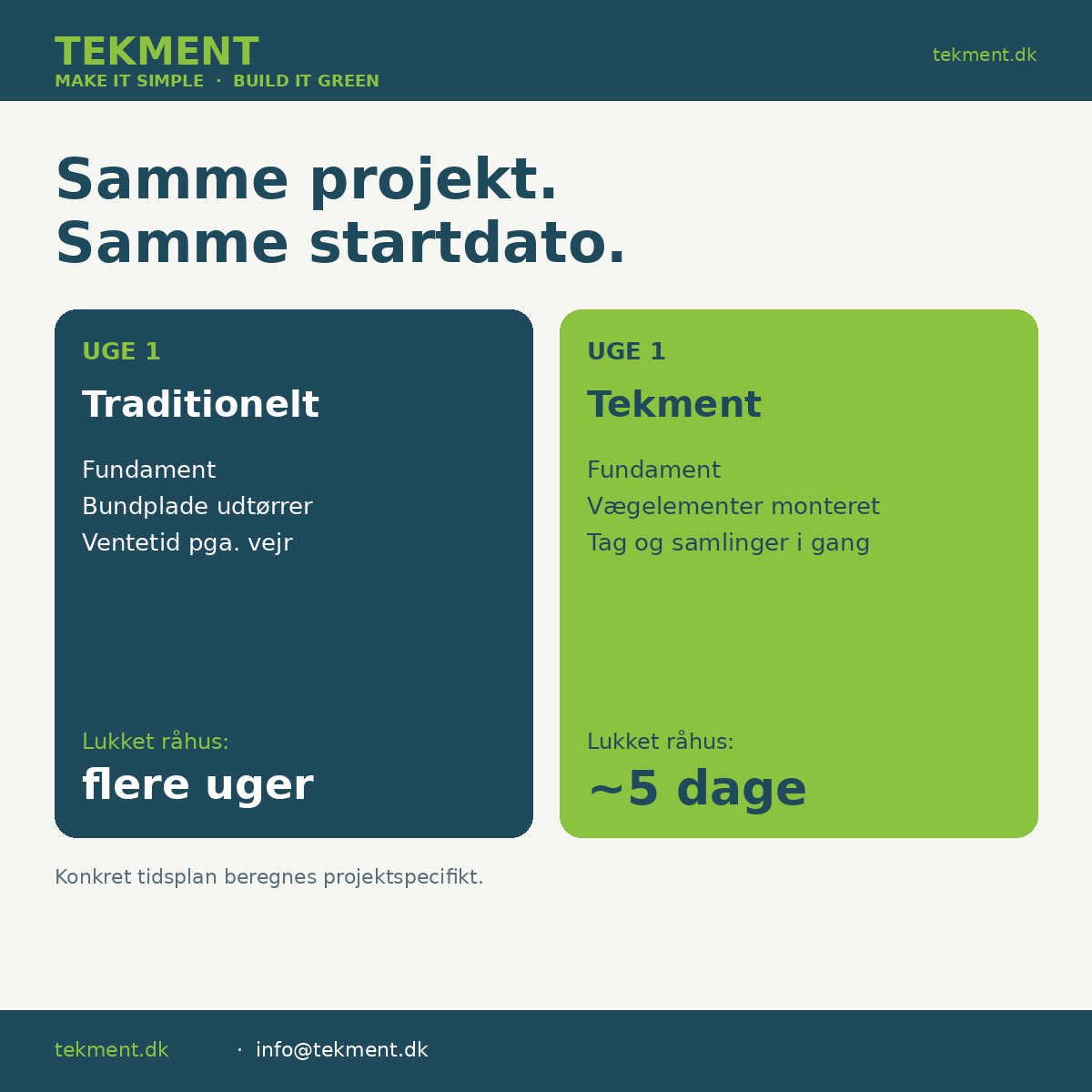
- Week 2: The shell is closed with CemPU — in traditional construction the foundation is still drying
- Week 5–7: The CemPU project is finished — traditional construction is still at shell stage
- Weather-independent: Dry assembly without mortar — can be performed in frost and wet weather
- Fewer working days: 5–11 days on site vs. 6–10 weeks of bricklaying for a 150 m² family house
- Fewer stakeholders: One delivery for the envelope vs. bricklayer, insulation team, vapour-barrier team and façade contractor in traditional construction
Week 1
foundation
Both systems
same start
Week 2
closed with CemPU
Traditional: foundation
drying
Week 3–4
internal works
Traditional: walls being raised
slow progress
Week 5–7
finished with CemPU
Traditional: still shell
not closed
How much does the building system affect schedule?
Where is your project in week 1? In week 3? In week 5? The same start date can give very different schedules depending on the system choice. Here are documented comparisons. The audience for this information is developers and project managers.
Where do I find documentation for the build time?
All claims here are supported by the sources listed at the bottom of the page. Send an email to info@tekment.dk if you need access to the full reports.