
What Module A5 covers
In LCA methodology per EN 15804+A2, Module A5 is the site phase: transport on site, installation, and not least drying of construction moisture. It is a line item that is often underestimated – but can be decisive in whether the project meets BR25's climate limit value.
How construction moisture contributes to CO₂
Drying traditional construction requires mechanical dehumidification and heating – typically electricity consumption in the order of several thousand kWh for a single-family house. Each kWh of electricity has a CO₂ footprint. The direct consequence: Module A5 alone can account for a significant share of a BR25 project's total climate impact.
CemPU's contribution
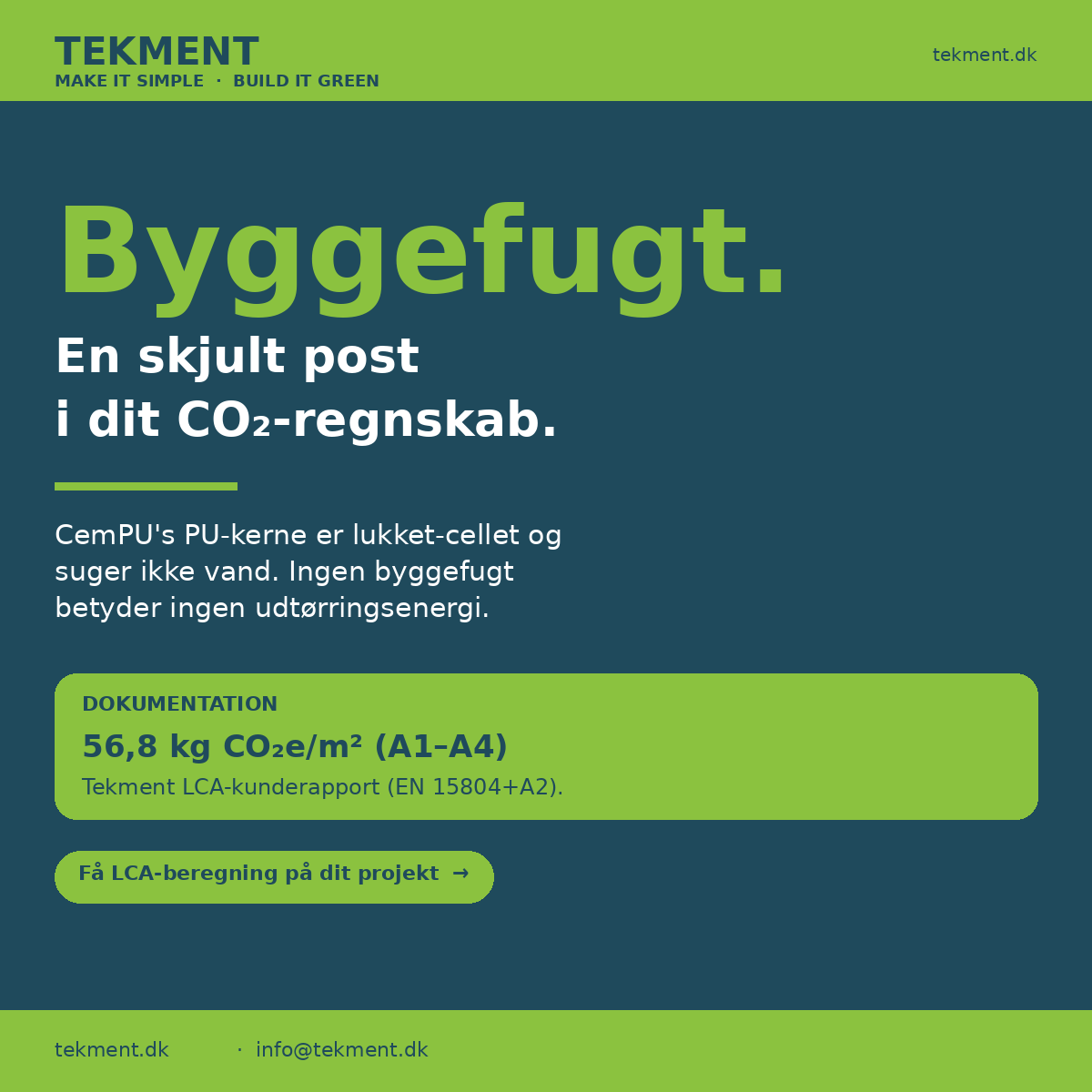
Tekment's LCA documents A1–A4 at 56.8 kg CO₂e/m² (Tekment 336 with low-GWP PU). Module A5 (at project level) depends on the construction site and logistics, but because CemPU does not absorb construction moisture, a large item in A5 disappears. Your LCA consultant gets concrete figures to work with.